
Piece count is the first number everyone checks. Before the scale, before the photos, sometimes before the name of the car itself. And it makes sense, because that one figure quietly tells you three things at once: how long you'll be building, how much detail you're getting, and how much of your shelf the finished thing will claim.
But only if you know how to read it. A 3,000-piece kit is not simply "twice as good" as a 1,500-piece kit. It's a different kind of project entirely.
We design and test-build every set we sell, so we've spent a lot of hours deciding where pieces go and, just as often, where they don't. Here's what the number on the box actually means.
The three bands that matter
Forget precise figures for a moment. In practice, MOC car kits fall into three rough bands, and the band matters far more than the exact count.
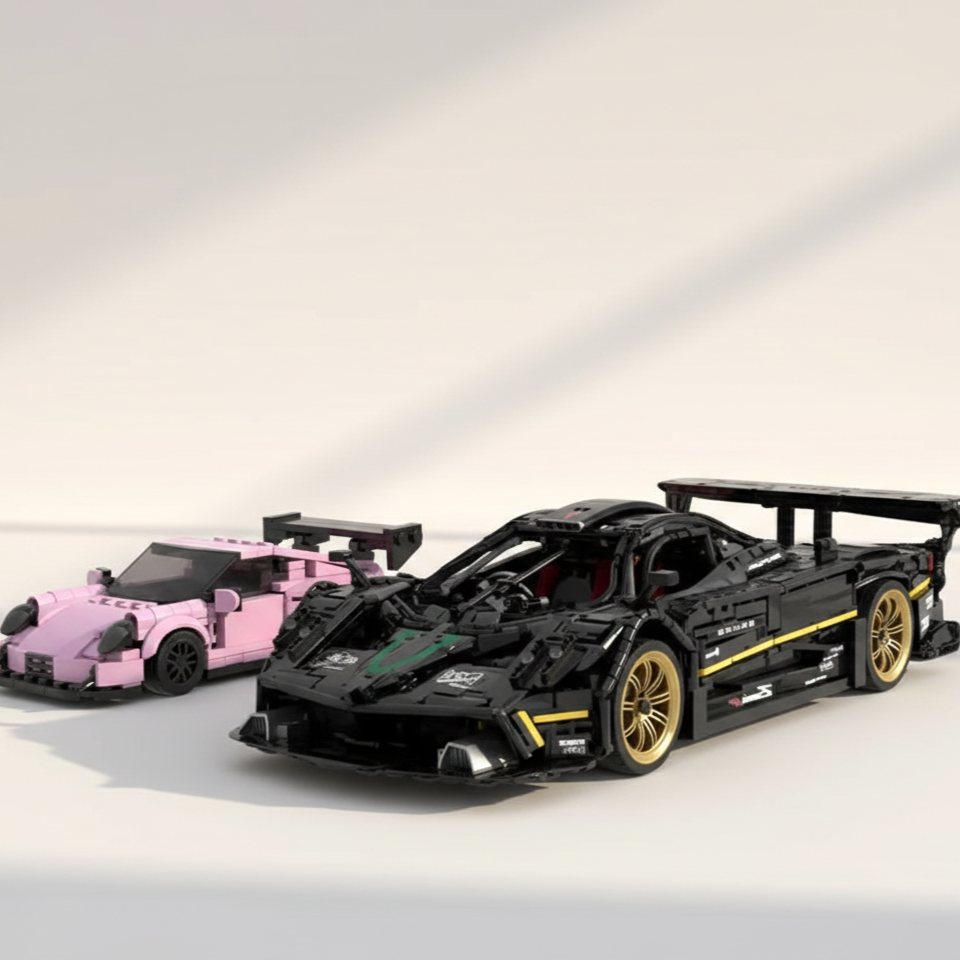
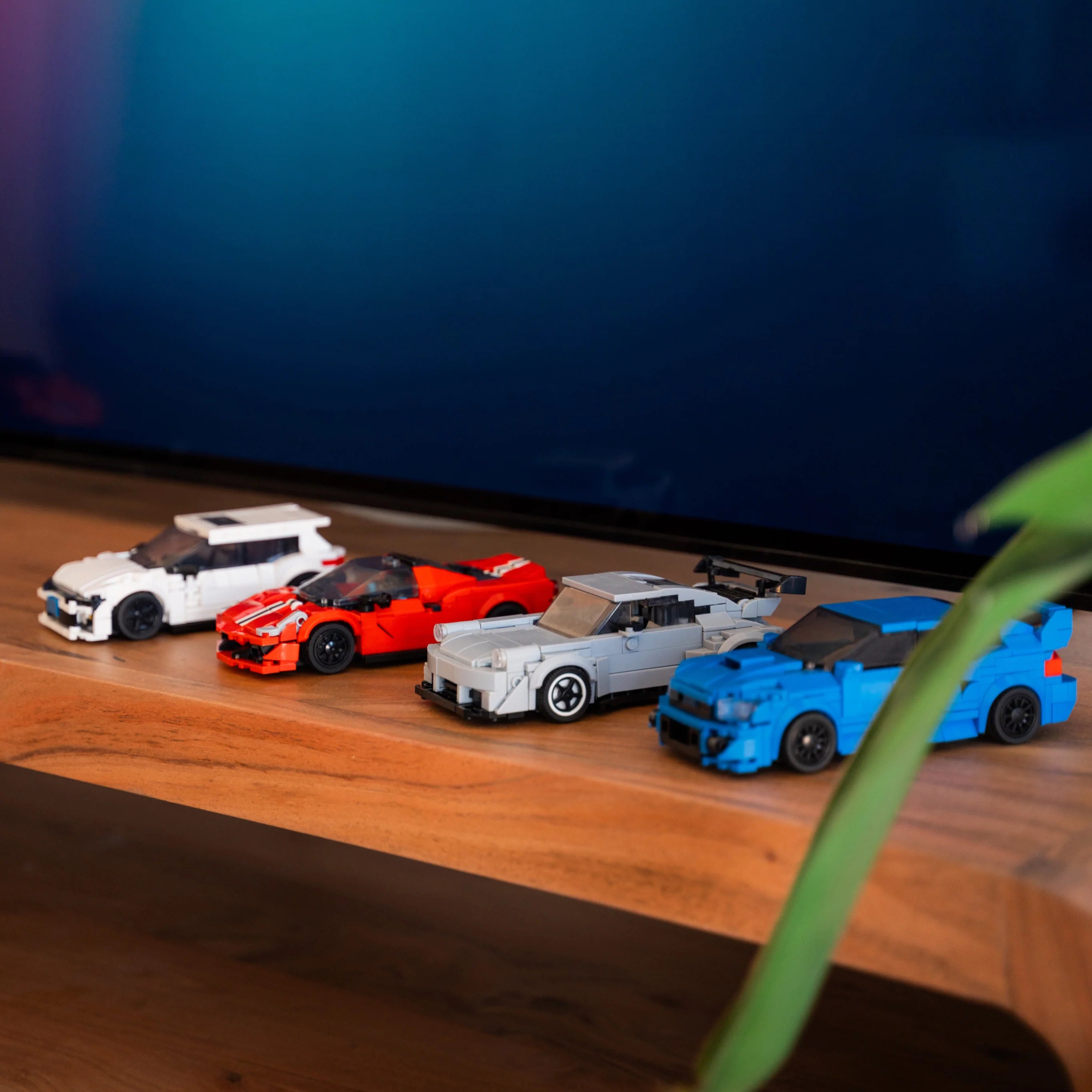
Around 1,000 to 1,500 pieces. This is an evening. Maybe a long evening with a cup of tea going cold next to you, but one sitting is realistic. Kits in this range are usually smaller, quicker builds in 1:24 or similar, and the pieces mostly go into getting the silhouette right: the bonnet line, the wheel arches, the stance. You get a recognisable, display-ready car without committing a weekend to it.
2,000 to 3,000 pieces. Now you're into weekend territory. The extra thousand pieces rarely make the car much bigger. They make it deeper. Doors that open properly. A steering wheel that turns the front wheels. An interior you can actually see when you peer through the windscreen instead of a hollow shell. This is the band where a kit stops being a model of a car's shape and starts being a model of the car.
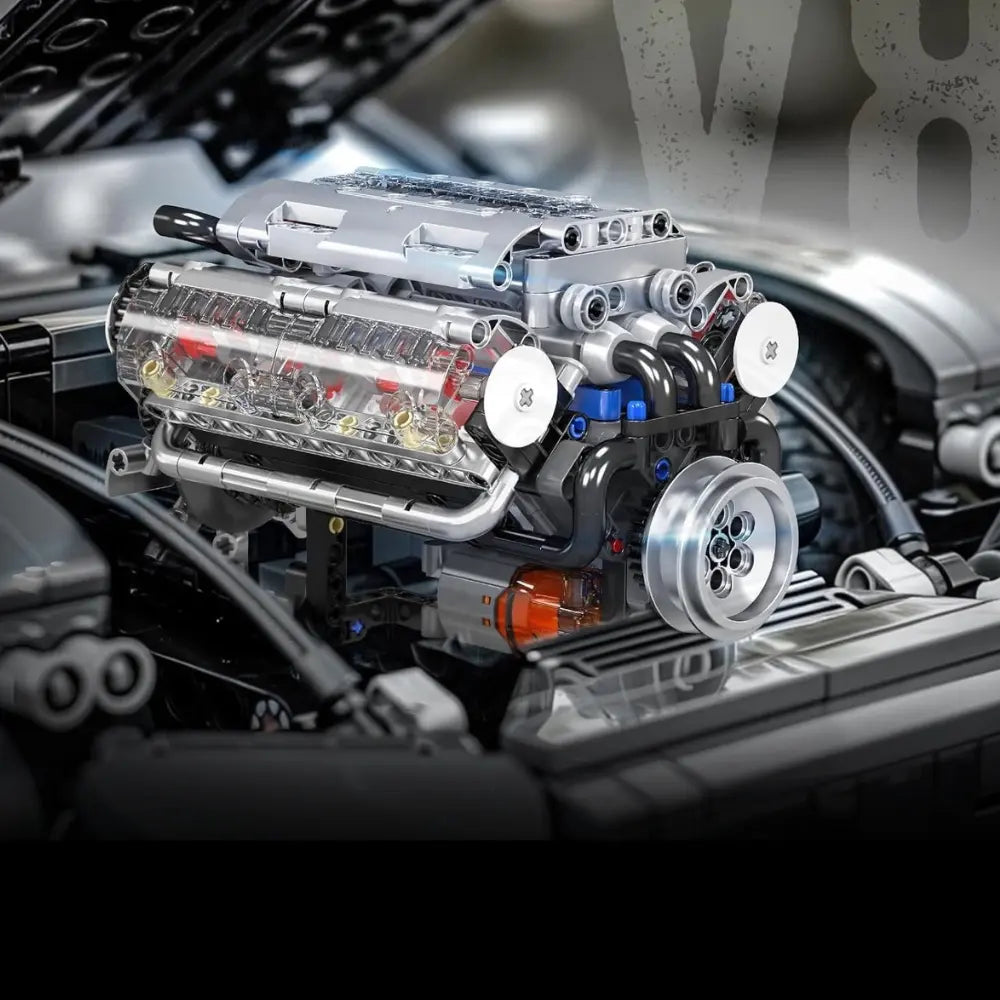
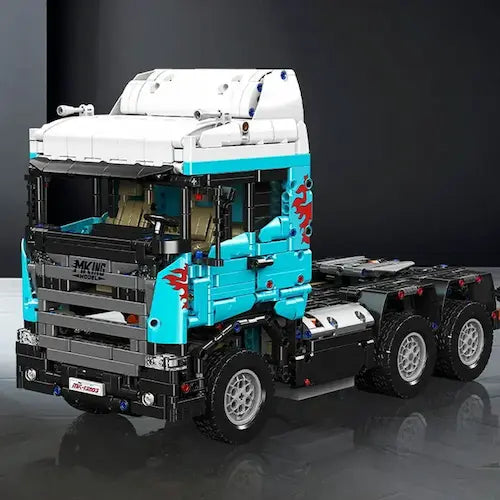
4,000 to 5,500 and beyond. Multi-day projects. Sometimes multi-week, depending on how your evenings look. At this level the piece count is being spent on things you can't see from across the room: working suspension, a differential, gear linkages, hinged panels, and often the wiring and housings for remote control electronics. These are the kits people build slowly on purpose, because the building is the point.
Where 3,658 pieces actually go
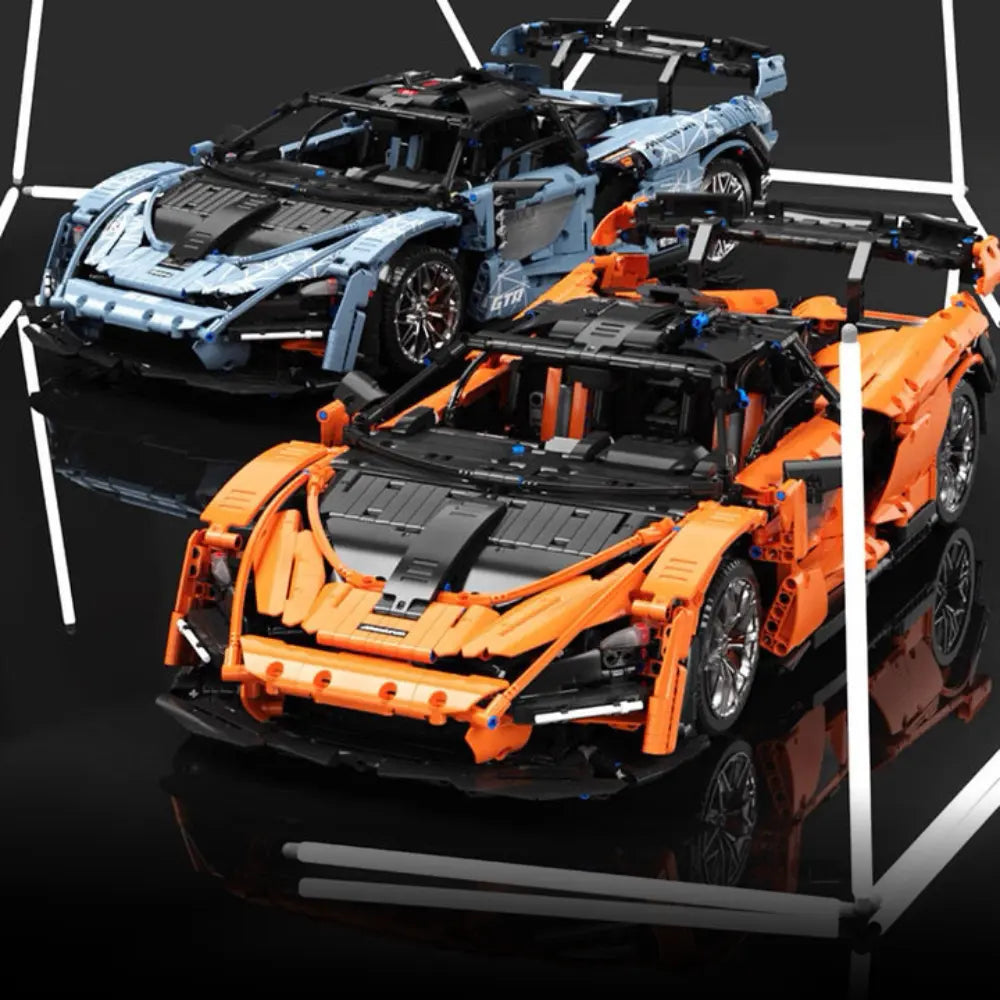
Numbers stay abstract until you pin them to a real kit, so take our McLaren 720S with remote control, electric air suspension and electric doors 3,658 pieces.
If all of those went into bodywork, you'd have an enormous slab of a car. They don't. Roughly speaking, the count splits three ways.
A large share goes into the body and the visual detail: the 720S has those complex, scooped-out flanks and a very low nose, and getting a curved supercar silhouette out of rectangular bricks is expensive in parts. Panels layer over panels. Angles are built up from wedges and hinges rather than single shaped pieces.
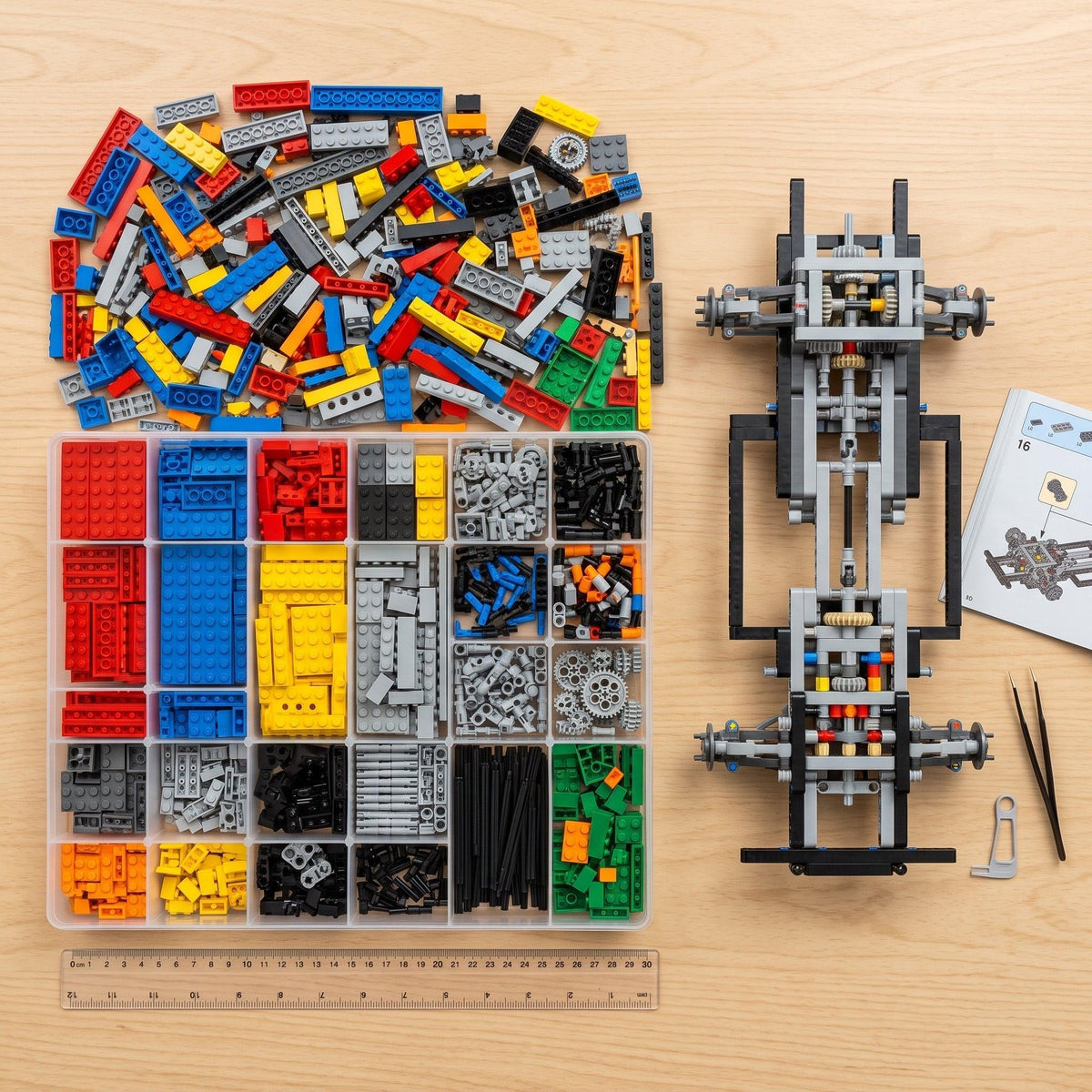
Another substantial chunk disappears into the chassis and mechanics. The air suspension needs mounts, linkages and travel space at all four corners. The electric doors need hinges strong enough to survive repeated use, which is exactly the sort of thing that goes through durability testing before we release a set, because a door mechanism that works forty times and then sags is worse than no mechanism at all.
The rest is the unglamorous stuff: the structure holding the motors, the battery housing, the internal frame that stops a heavy model twisting when you pick it up. Nobody photographs this part of the build. Everyone benefits from it.
Piece count and scale pull in the same direction, mostly
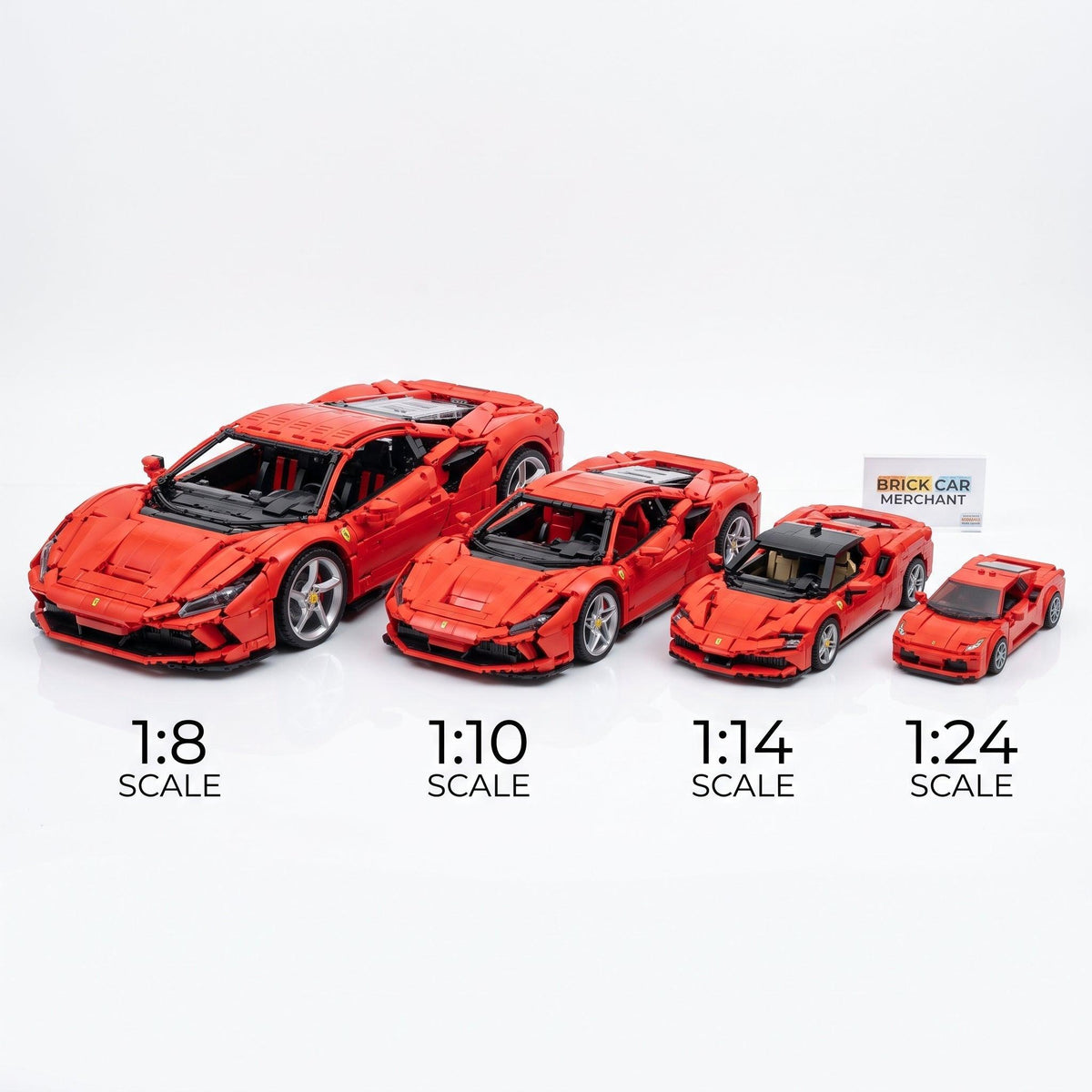
Bigger scale generally means more pieces, for the obvious reason that a 1:8 car has far more surface area to cover than a 1:24 one. But the relationship isn't rigid, and this is where reading the number carefully pays off.
A 1:24 kit with an unusually high piece count is telling you the pieces are small and the detail is dense. A big-scale kit at the display-piece end of the range with a modest count is telling you the opposite: larger panels, simpler internals, faster build. Neither is wrong. They're just different products wearing similar boxes.
Our rule of thumb when designing: if two kits sit at the same scale and one has 40% more pieces, that extra 40% is almost always mechanical. Suspension, drivetrain, opening panels. The shell of a car costs what it costs. Everything beyond the shell is where counts climb.
Which is also why builders who care about the mechanical side, the gearboxes and differentials and working engine blocks, should treat a high piece count as a feature in itself. Those pieces are the build.
What the number doesn't tell you
A few honest caveats, because piece count gets treated as a quality score and it isn't one.
It doesn't tell you difficulty. A 2,500-piece static kit with clear, repetitive body sections can be an easier build than a 1,800-piece kit with a fiddly gearbox in the middle of it. Mechanical assemblies are slower per piece. Much slower, sometimes.
It doesn't tell you finished size. Two kits with identical counts can end up dramatically different lengths on the shelf depending on scale and how densely the pieces are used.
And it doesn't tell you how the kit feels to build. That comes down to instruction quality, part variety and how well the model is engineered, which is exactly the sort of thing piece count was never designed to capture.
How many pieces do you actually need?
Here's the simple test we give people who ask, and it has nothing to do with budget.
Be honest about your building time for the next month. Not your ideal time. Your real one.
If you've got scattered evenings and you want a finished car on the shelf soon, stay in the 1,000 to 1,500 band. You'll finish it, enjoy it, and come back for more. That last part matters. The fastest way to kill the hobby is a half-built 5,000-piece project glaring at you from the dining table for two months.
If you can protect a full weekend and you've built at least one kit before, the 2,000 to 3,000 band is the sweet spot. Enough depth to be satisfying, not enough to stall.
The 4,000-plus kits are for when you already know you love the process. When the answer to "how long will this take" is "good", you're ready. Not before.
One more thing from our side of the workbench: we deliberately keep kits at every band in the range, because a collection built entirely of monsters isn't a collection, it's a backlog. Some of the most photographed builds our customers send in are the smaller cars, done well, displayed with a bit of care.
The number on the box is a promise about time and depth. Read it that way, match it to the month ahead of you, and you'll pick right almost every time.

Leave a comment
This site is protected by hCaptcha and the hCaptcha Privacy Policy and Terms of Service apply.