
Scale is the decision people get wrong most often. Not because it's complicated, but because instinct pushes everyone the same way: bigger must be better, so buy the biggest one the budget allows.
We've watched that logic play out enough times to say it plainly. It isn't true. The right scale depends on your shelf, your patience and how many kits you've built before, and for a surprising number of people the honest answer is the smallest one we make.
Here's the full comparison, with the sales pitch removed.
What scale actually means on your shelf
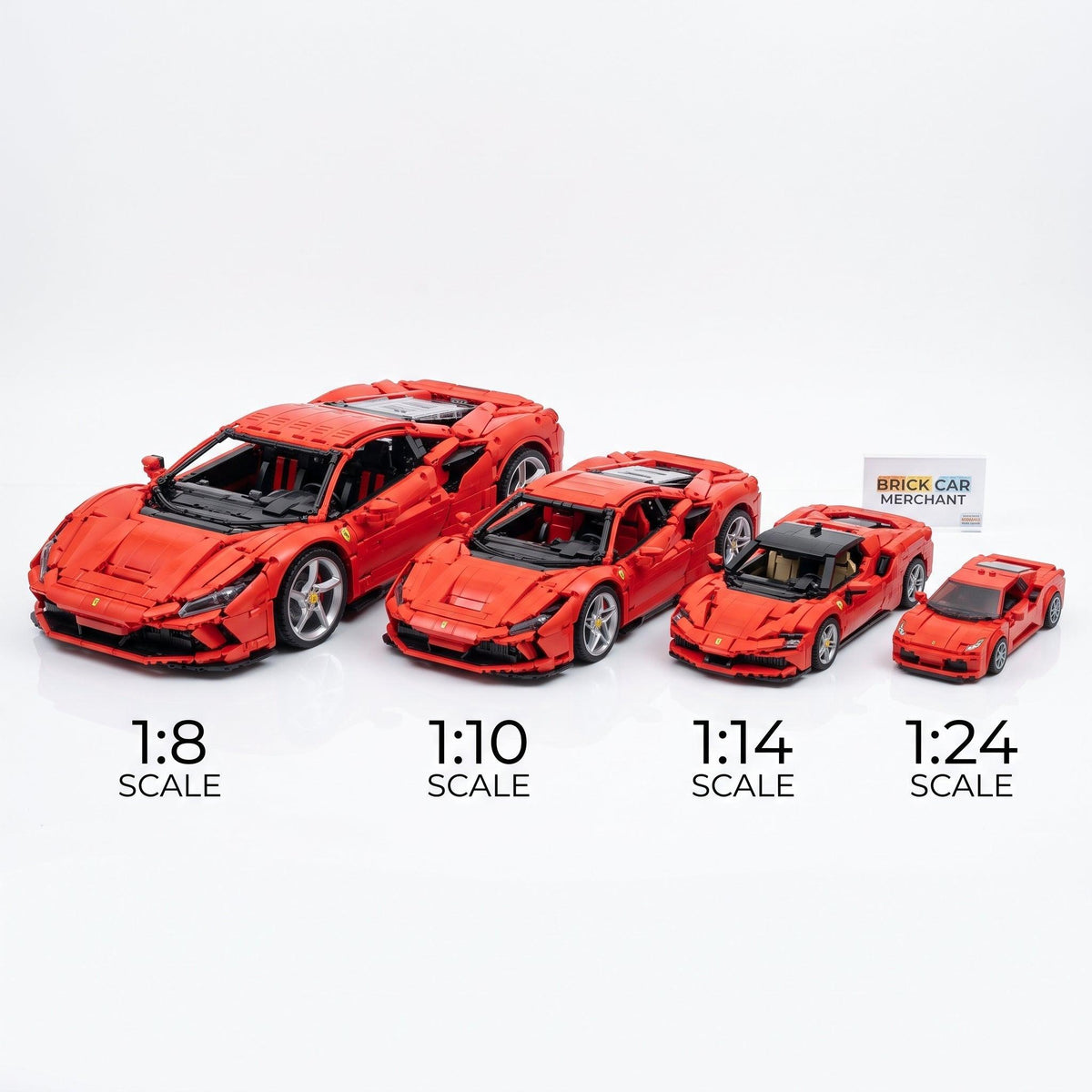
Quick grounding first, because the numbers are abstract until you convert them. Scale is the ratio between the model and the real car. A real saloon or sports car runs somewhere around four and a half to five metres long, so the maths works out roughly like this.
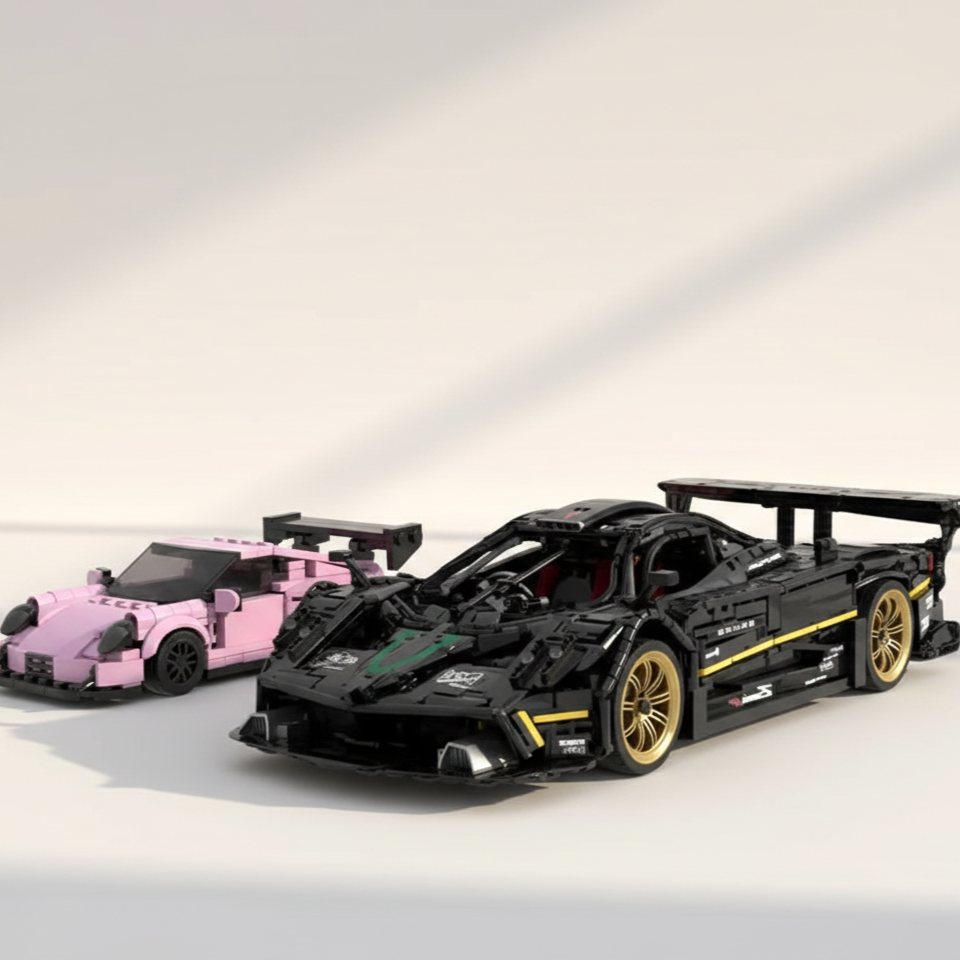
A 1:8 kit lands around 55 to 60 centimetres. That's most of an arm's length. It needs its own shelf, realistically its own display area.
A 1:10 kit comes in around 45 to 50 centimetres. Still a serious presence, but it shares space more politely.
A 1:14 kit sits near 32 to 35 centimetres. Bookshelf territory.
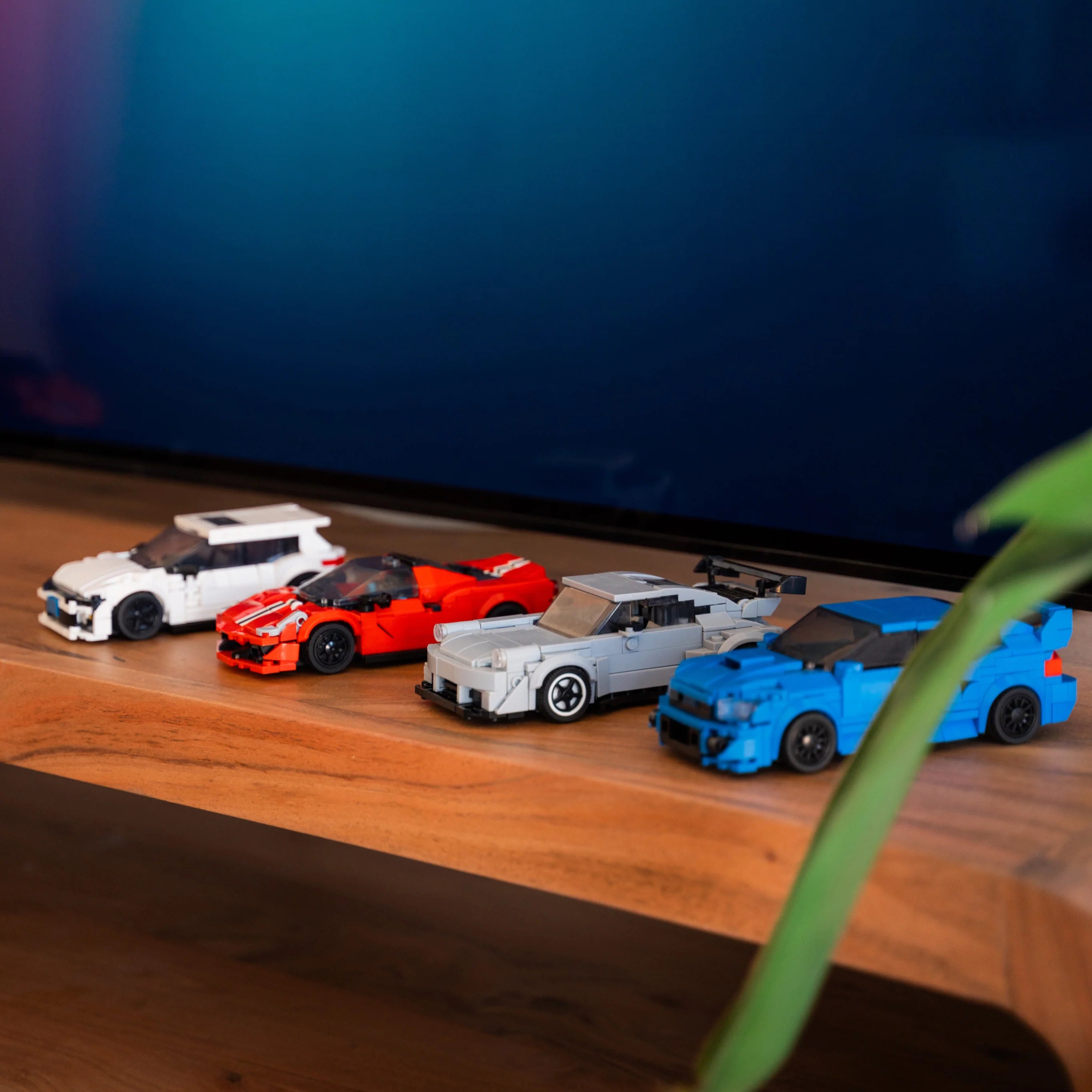
A 1:24 kit is about 19 to 21 centimetres. You can line up four or five of these where a single 1:8 would sit.
Measure your intended spot before you buy. We're serious. The most common regret we hear isn't about the model, it's about the model not fitting where it was supposed to go.
1:24. The scale we tell beginners to start with
We'll state our position early rather than bury it: if this is your first MOC car kit, start at 1:24.
Not because small kits are lesser. Because a first build has one job, which is to teach you whether you enjoy the process, and 1:24 does that job in an evening or two instead of a fortnight. Piece counts stay manageable. There's no electronics to wire, no suspension geometry to fight. The build is mostly about the car's shape, which means constant visible progress, and visible progress is what keeps a first-timer going.
Something like the Dodge Challenger is exactly this kind of kit. A recognisable muscle car silhouette, a satisfying build, a finished model that looks sharp on a desk. The Chevrolet Camaro sits in the same bracket. Straightforward cars, done properly.
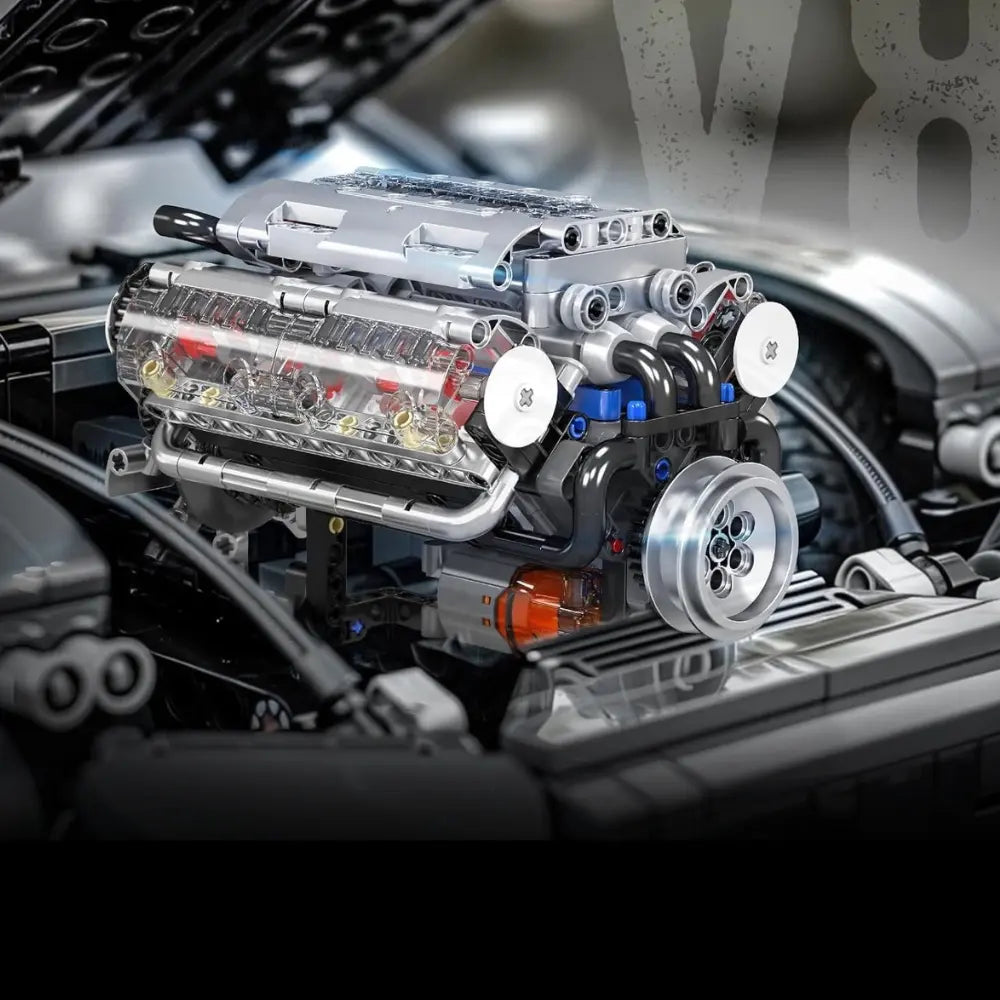
Detail level at 1:24 is honest rather than exhaustive. You get the stance, the proportions, the character of the car. You don't get a gear-linked engine bay, and you shouldn't want one yet.
1:14. The middle child that earns its place
1:14 is where detail starts turning inward. Doors that open. Interiors worth looking into. Sometimes basic steering.
Build time stretches to a weekend, give or take, and the finished model is big enough to read from across a room without dominating it. If 1:24 is a desk model, 1:14 is a shelf model.
Who it suits: someone with one or two builds behind them who wants more depth without committing to a monster. It's also the practical ceiling for anyone whose display space is a standard bookshelf, because most shelves are around 30 centimetres deep and a 1:14 car fits with room to angle it.
1:10. Detail without the full commitment
At 1:10 you're getting most of what the big scale offers. Working features become normal rather than exceptional. Suspension, opening panels, properly furnished interiors. Piece counts climb accordingly, and so does build time. Think several evenings, sometimes a full week of them.
The honest question at this scale is whether you should just go to 1:8 instead, and our answer is: 1:10 is for people who want the engineering but genuinely don't have the space. That's a real constraint, not a compromise. A 1:10 build on a shelf that fits it beats a 1:8 build wedged sideways on top of a wardrobe.
1:8. When you already know what you like
The 1:8 scale is the display-piece end of our range, and we design it for people who have already answered the question the smaller scales exist to ask.
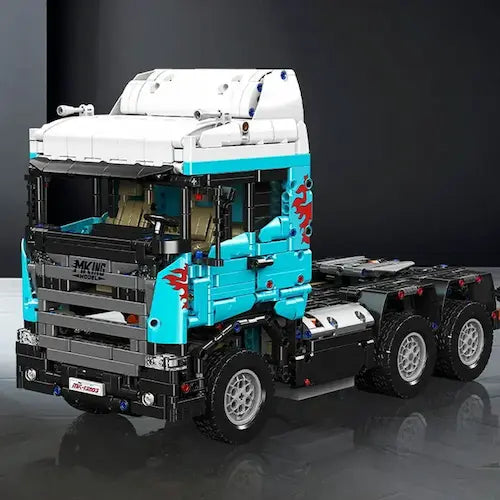
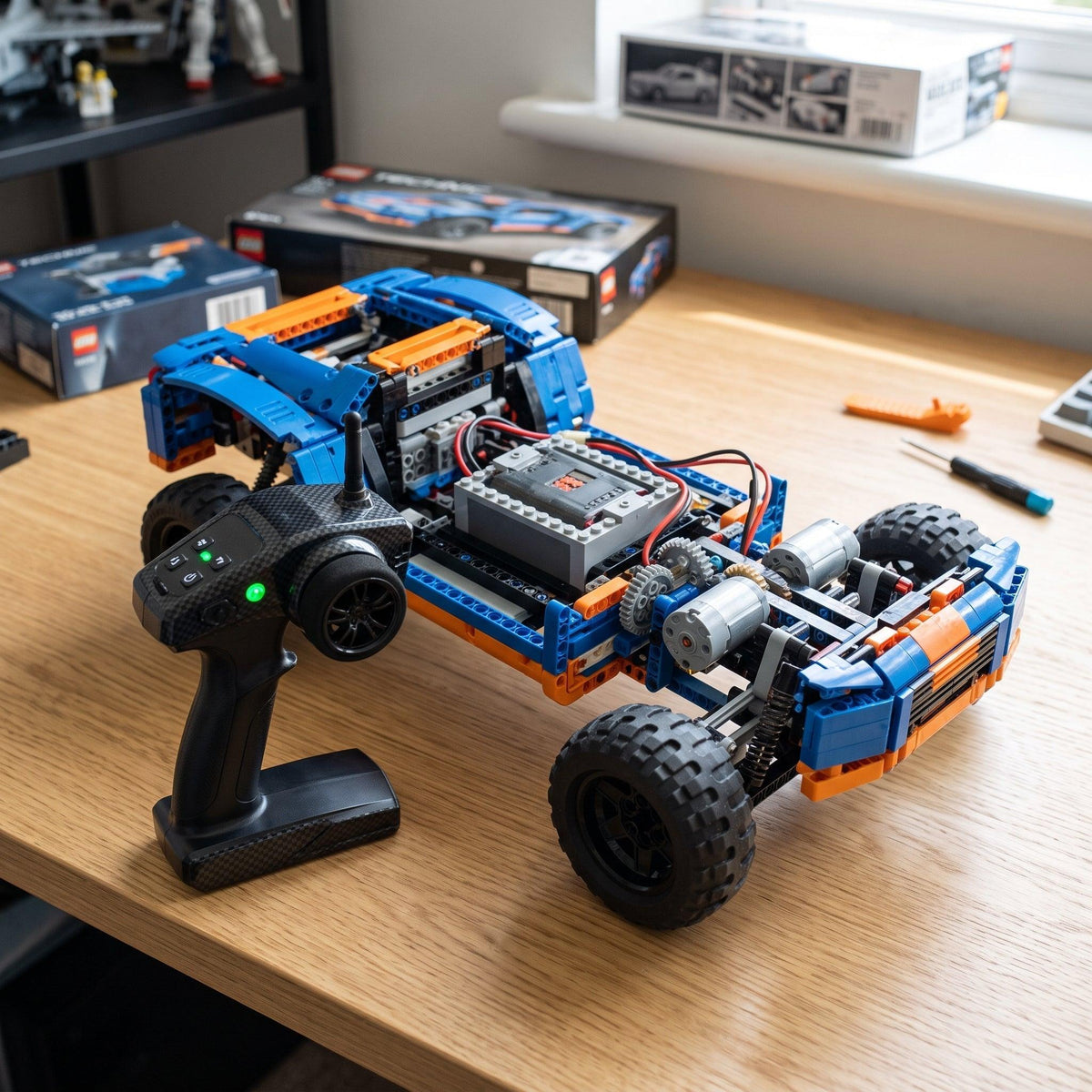
Everything about 1:8 is more. More pieces, more mechanical systems, more time, more presence when it's done. This is where remote control drivetrains, electric suspension and full opening panels live comfortably, because the scale gives the mechanisms room to work. It's also where the big, characterful vehicles land. Our Ford VelociRaptor 6x6 with the Mustang GT500 is a good example of what the scale makes possible: a massive six-wheeled pickup that simply couldn't exist with the same detail at 1:24. The bulk is the point.
But 1:8 punishes impatience. A stalled large-scale build is a very expensive pile of bags. If you've finished a couple of kits, know you love the process and have a clear half-metre of display space waiting, 1:8 is the best thing we make. If any of those three isn't true yet, it will still be here when it is.
The comparison in one honest pass
Shelf space: 1:24 wins by a mile, 1:8 demands the most and deserves it.
Detail: rises steadily with scale, but the jump from 1:14 to 1:10 is where mechanical features become standard rather than a bonus.
Build time: an evening at 1:24, a weekend at 1:14, a week of evenings at 1:10, an open-ended project at 1:8.
Price: tracks scale closely, because pieces and mechanisms cost money. No surprise there.
First kit: 1:24, and we mean it. Second or third: 1:14 or 1:10 depending on your shelf. The kit you've been circling for months and can picture the exact spot for: that's the 1:8.
Why we bother making four scales at all
Fair question, since one or two would be simpler for us.
The answer is that builders don't stay in one place. Someone starts with a Challenger on a desk in a flat. Two years later they've got a display cabinet and an appetite for suspension geometry. A range with four scales means the hobby can grow with the person instead of forcing a choice between "toy-sized forever" and "buy the enormous one and hope".
It also means budgets of very different sizes all get a properly designed kit rather than a cut-down afterthought. Every scale we sell goes through the same test-building and durability checks, because a 1:24 that falls apart is just as bad an introduction to the hobby as a 1:8 that does.
Pick the scale that fits your life right now. The bigger ones aren't going anywhere.

Leave a comment
This site is protected by hCaptcha and the hCaptcha Privacy Policy and Terms of Service apply.