
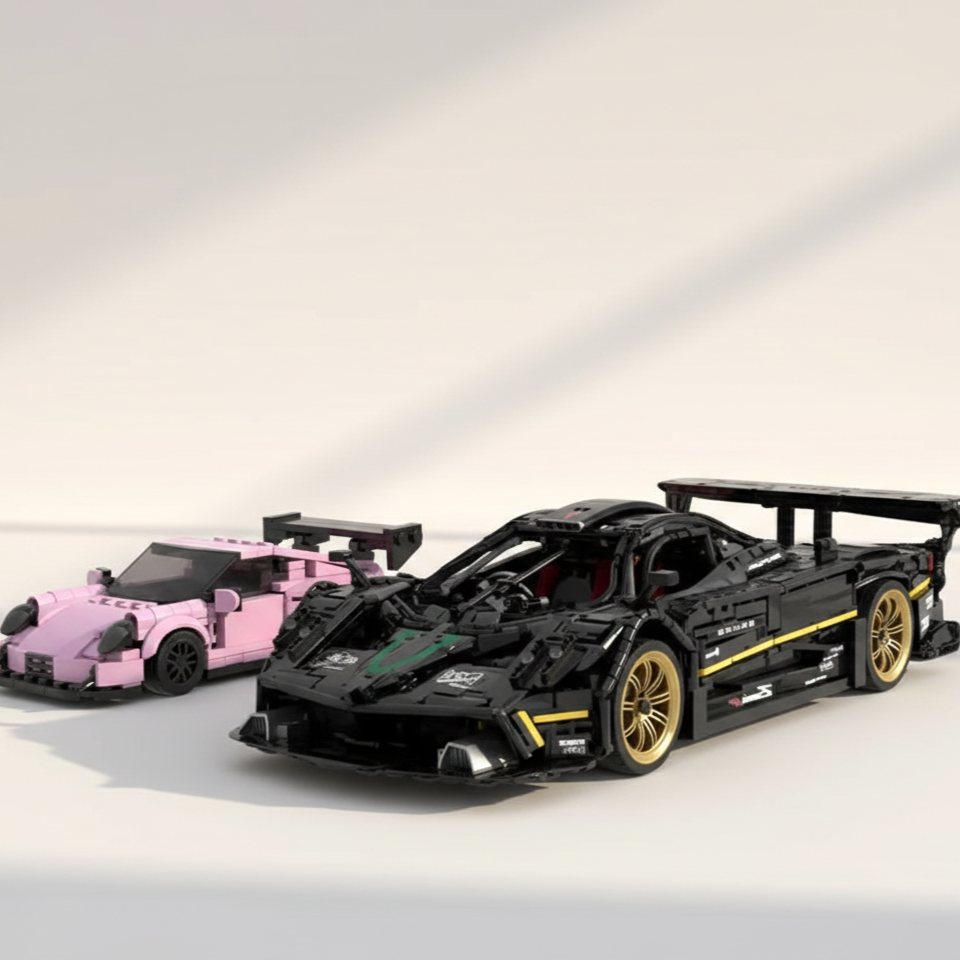
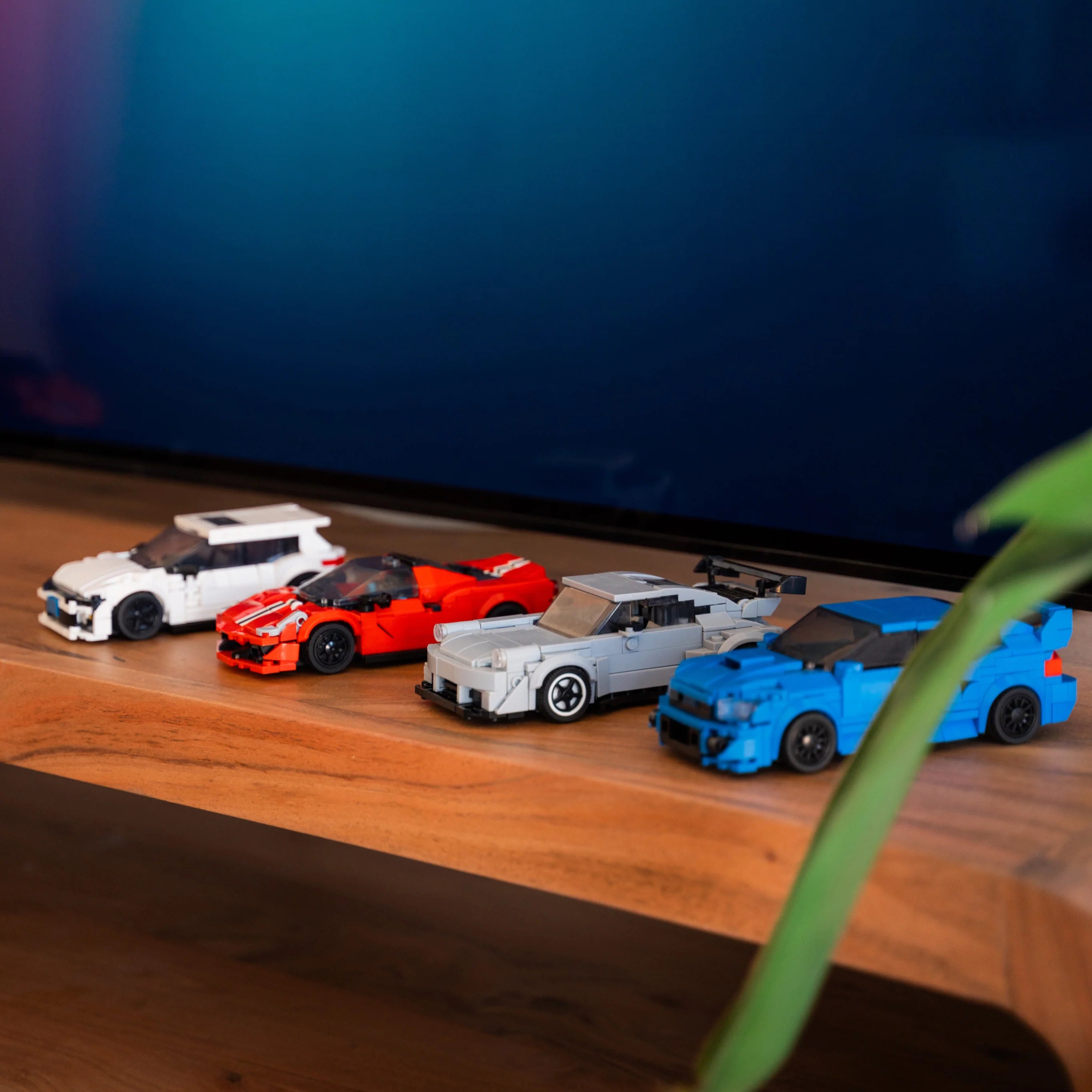
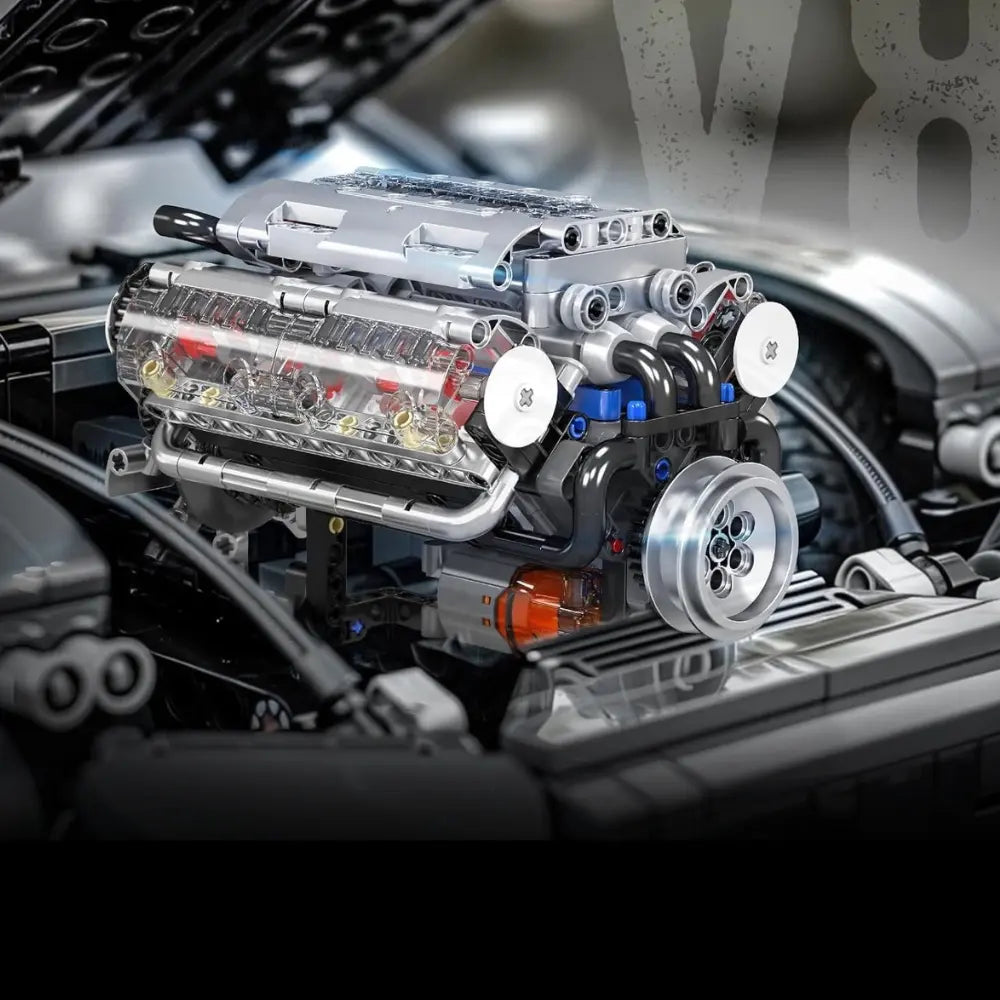
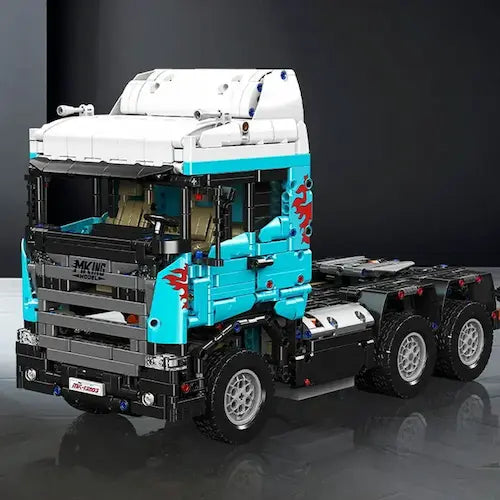
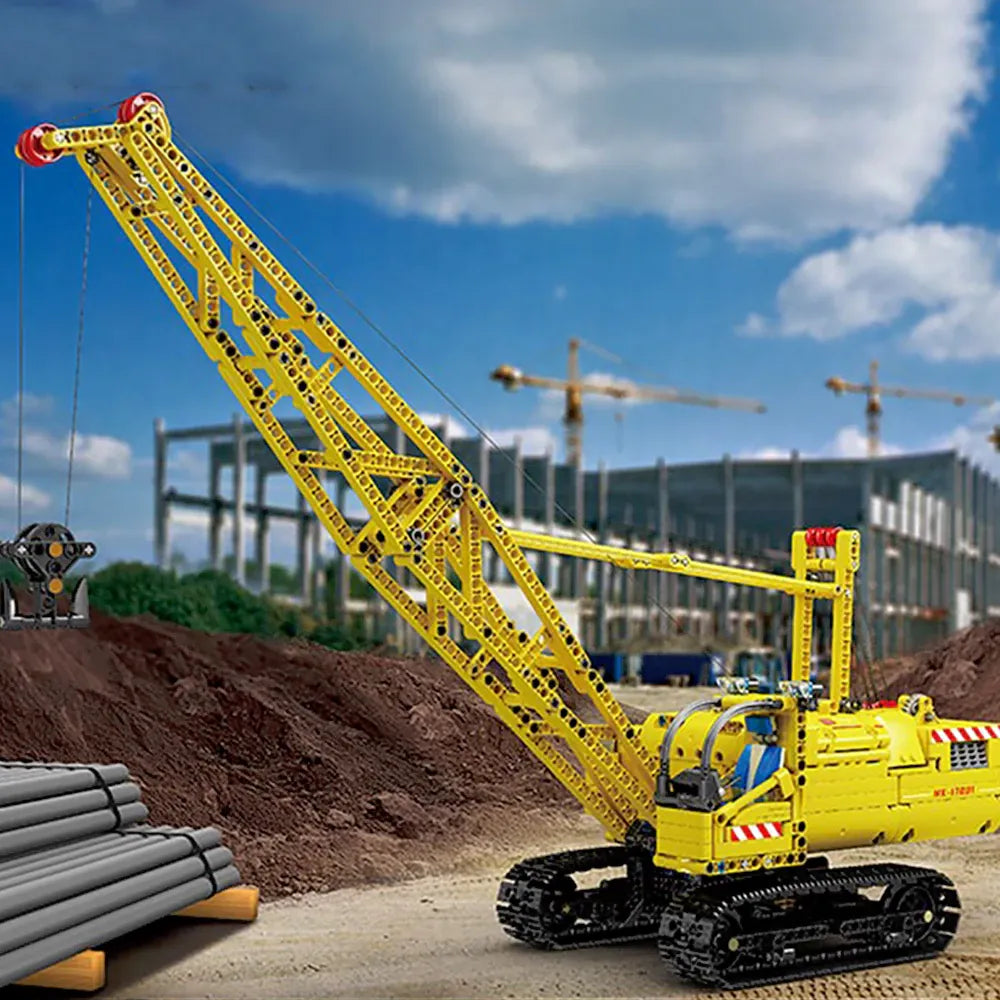
The listing says "Remote Control, Electric Air Suspension, Electric Doors" and the price is noticeably higher than the static kit next to it. Fair enough. But if you've never built an RC kit, that line of features is doing a lot of work without explaining any of it.
So let's open one up, figuratively, and walk through what's actually in there. Not the brochure version. The version you'd want to know before the box arrives.
What gets motorised, and what doesn't
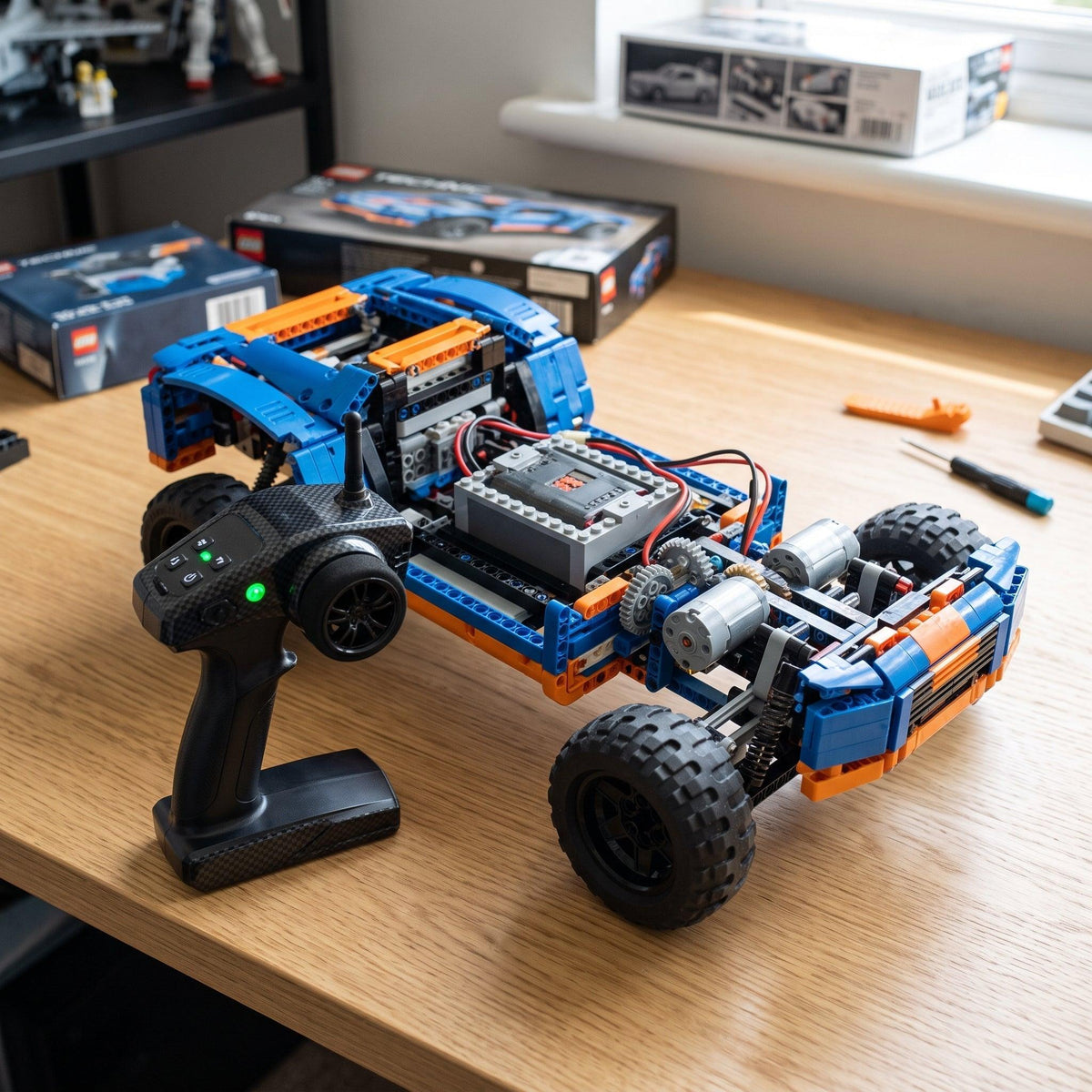
An RC MOC car kit is a normal brick-built car with an electromechanical skeleton hiding inside it. That skeleton usually covers some combination of four systems.
Drive. A motor, sometimes two, turning the rear or all four wheels through a brick-built drivetrain. This is the core of "remote control" and every RC kit has it.
Steering. A separate small motor or servo turning the front wheels. Also standard. Without it you'd have a car that only goes in straight lines, which gets old in about eleven seconds.
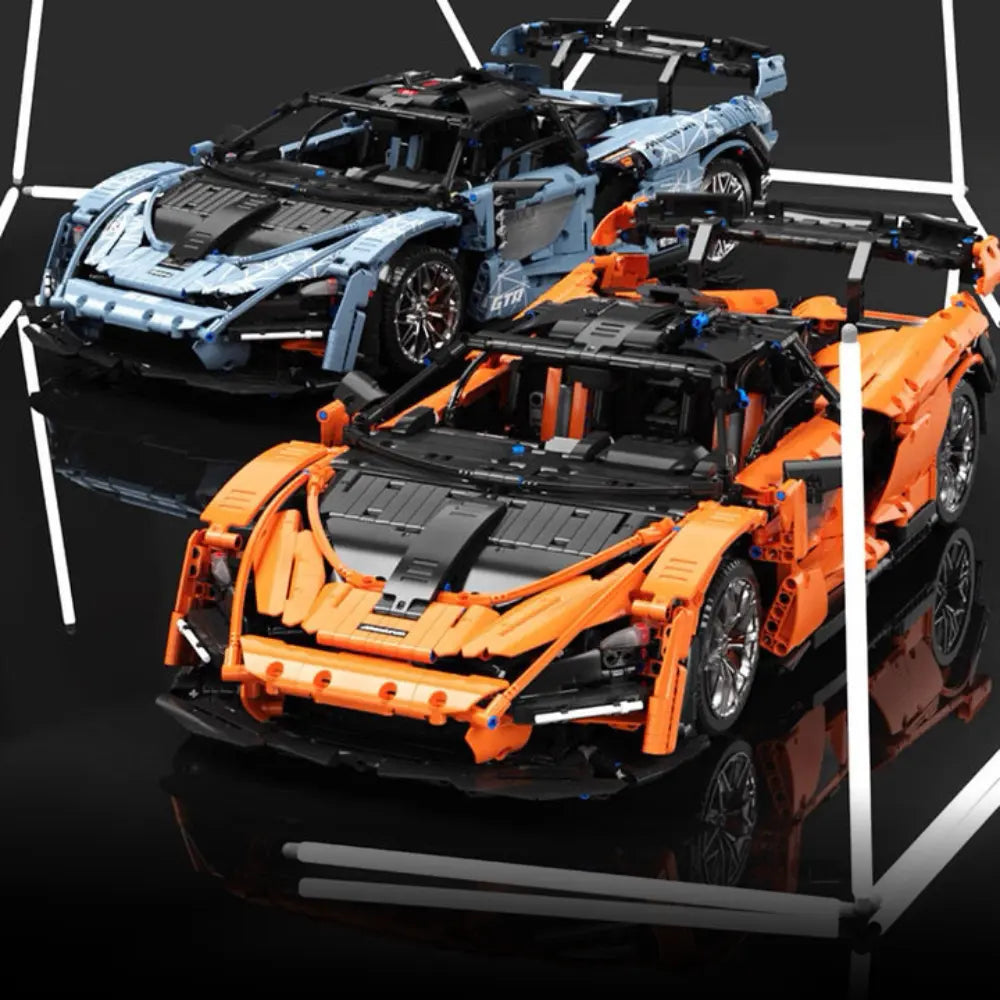
Suspension. This is where kits diverge. Passive suspension, springs that soak up bumps, exists in plenty of static kits too. Electric air suspension is the premium version: motorised units that raise and lower the ride height on command. Our Lamborghini Millanio — The Ultimate Italian Concept with RC and Electric Air Suspension — does exactly this, and watching a finished build drop onto its haunches is genuinely the party trick of the whole category.
Doors. Electric doors mean motorised hinges that open and close from the remote. Scissor doors on the Lamborghini-style kits, conventional ones elsewhere. Pure theatre, zero performance value, absolutely worth it.
Not every RC kit has all four. That's the single most useful thing to understand before comparing prices, and we'll come back to it.
Where the power lives
Every one of those systems needs electricity, and the battery box is the least glamorous, most consequential component in the whole kit.
Designers integrate it into the chassis floor or under the interior, low and central, for two reasons. Weight, first: a battery is the heaviest single component in the model, and putting it low keeps the car stable when it's actually driving. Access, second: you need to reach it to charge or swap it without dismantling the bodywork you spent three evenings on.
When we test-build our own designs, battery access is one of the things that gets prototypes sent back. A kit where charging means removing the seats fails the test, no matter how good the rest of it is. Wiring runs through the chassis in planned channels, so during the build you'll hit steps that say, in effect, "route this cable here, now, because in twenty steps this area will be sealed under bodywork". Take those steps literally.
What RC does to the build itself
Here's the honest part. An RC kit is a harder build than a static kit of the same size, and not only because there are more pieces.
The steps are less forgiving. In a static build, a slightly misplaced brick usually costs you aesthetics. In an RC build, a gear meshed one stud off can mean the steering binds or the drivetrain grinds, and you might not discover it until the whole chassis is enclosed. The fix at that point involves un-building. Nobody enjoys that.
Our standing advice, and we give it to every customer who asks: test each system the moment it's complete. Built the steering assembly? Power it, turn it lock to lock, watch it. Finished the drivetrain? Spin it before the body goes on. Kits like the British Defender with remote control and front and rear suspension make this easy because the chassis is a complete, testable rolling unit before any bodywork begins. Use that. Ten seconds of testing per stage saves an hour of archaeology at the end.
The wiring wants patience too. Cables have exact lengths. Route one lazily and it'll be too short where it needs to plug in, or it'll rub against a rotating axle. Neither is a disaster. Both are avoidable by simply doing the cable steps when the instructions say to.
None of this should scare anyone off. It should just reset expectations: an RC build is several evenings of engineering, not one evening of stacking. People who go in knowing that tend to love it.
Why RC kits cost more, mechanically speaking
The price gap between static and RC isn't padding. You're paying for motors, a battery, a receiver and a remote, plus the design time to make a drivetrain that survives being driven.
That last part is worth dwelling on. A static model only ever has to hold its own weight. An RC model gets accelerated, steered hard, run into skirting boards. Every gear, hinge and suspension arm takes repeated load. This is exactly why every component in our kits, the electronic parts very much included, goes through durability testing before a set ships. A scissor door that opens beautifully fifteen times and then strips its mechanism isn't a feature, it's a refund waiting to happen, and catching that in testing is cheaper for everyone.
Scale plays into cost as well. RC systems need physical room, so RC kits cluster at the larger end of the range, and big scale means high piece counts before a single motor is added. The Mercedes G63 AMG Brabus G800 6x6 is the logical extreme: six wheels, huge body, full electronics package. Everything about it is more, including the number on the price tag.
"Just RC" versus the full package
Back to the thing that actually confuses buyers. Two kits can both say "remote control" and be quite different products.
The base level is drive plus steering. The car moves, it turns, and that's the whole electronic story. Simpler build, fewer motors, lower price. For a first RC kit this is honestly plenty.
The full package stacks electric air suspension and electric doors on top. Our Lamborghini Aventador and Porsche 963 sit in this territory alongside the Millanio. Each added system means more motors, more wiring, more build steps and more cost, and the features are about spectacle rather than driving. A car that lowers itself and opens its doors on the shelf is a different kind of object from a car that just drives.
Neither tier is the "correct" one. But know which one you're looking at before comparing prices, because a base RC kit undercutting a full-package kit isn't a bargain, it's a different specification.
If it's your first RC build
Three short rules and you're set.
Pick drive-and-steering over the full package first time out. Fewer systems, fewer ways to go wrong, and you'll learn the habits that make the big kits go smoothly.
Test every mechanism the moment it exists. Not at the end.
And follow the cable-routing steps exactly when they appear. Future you, holding a nearly sealed chassis, will be grateful.
The mechanical side of this hobby, the gearboxes, drivetrains and working assemblies, is a rabbit hole in the best sense. RC kits are simply that rabbit hole with a battery in it. Build one properly and the static shelf models start looking slightly less alive.
Ready to pick one? Browse our full Remote Control Cars range.

Leave a comment
This site is protected by hCaptcha and the hCaptcha Privacy Policy and Terms of Service apply.