
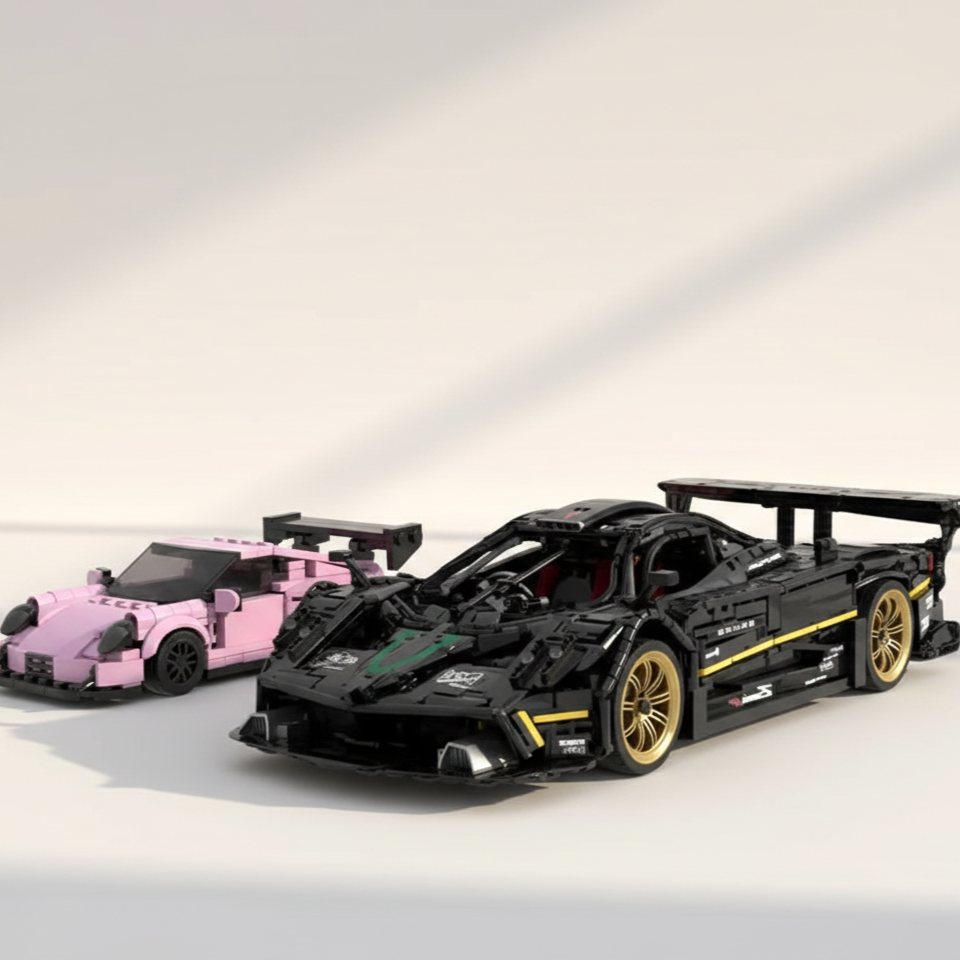
Search for “1:8 scale model car” and you’ll find the phrase attached to two very different worlds — vintage Italian model kit makers and hobby RC racing — that arrived at the same size independently, for the same reason. That’s not a coincidence, and it’s worth understanding why before you decide what to build.
What “1:8 scale” actually means
Scale is a ratio between a model and the real thing it represents. 1:8 scale means the model is an eighth the size of the real car in every dimension — length, width, height. A real car roughly 4.5-4.8m long finishes as a model somewhere in the 55-60cm range at this scale. It’s usually written 1:8, but you’ll also see 1/8 or “1 8 scale” — all three mean exactly the same thing.
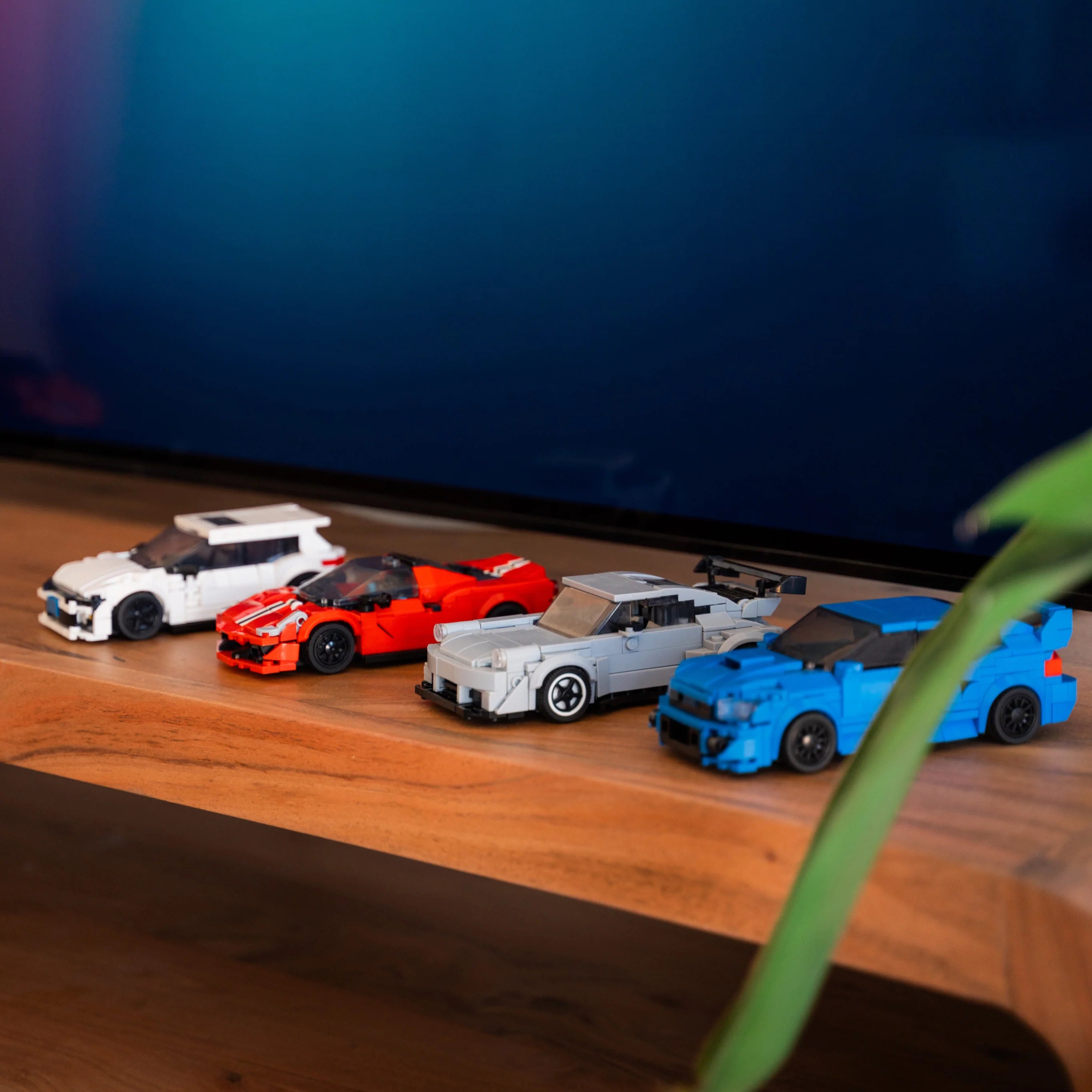
The smaller the second number, the bigger the model. 1:8 sits toward the large end of scale-model convention generally: for comparison, classic diecast collectibles are commonly 1:18 (around 28cm) or 1:24 (around 16-20cm), and 1:43 (around 10-13cm) traces its roots back to model railway conventions. 1:8 is roughly double the length of a 1:18 model in each dimension — and because volume scales with the cube of length, that’s a lot more physical model to work with, not just “a bit bigger.”
Two independent hobbies already answered this question
You don’t have to take a MOC seller’s word for why 1:8 is the size to take seriously — two much older hobbies got there first, for their own reasons.
Pocher, the Italian model-kit maker, has built almost exclusively in 1:8 scale for cars since 1966, when their debut model — a Fiat F2 130HP, the car that won the 1907 French Grand Prix — first appeared at the Milan Toy Fair. Sixty years later, Pocher still builds nothing but 1:8 (and 1:4 for motorcycles), specifically because, in their own words, “these large scales allow for exceptional mechanical detail and an impressive physical presence.” Their finished car kits run 50-60cm long — essentially identical to what a well-designed 1:8 brick-built car finishes at. Pocher has built Lamborghinis, Porsches, Mercedes-Benzes, Bugattis, Paganis, Ferraris and Rolls-Royces at this exact scale, for exactly the same reason MOC designers gravitate toward it: it’s the size where the detail actually has room to exist.
Hobby RC racing arrived at the same conclusion from a completely different angle — performance, not display. 1:8 is the standard scale for serious off-road buggy racing and on-road GT racing, specifically because it’s large enough to carry the motor, battery and mechanical hardware needed for real speed and durability, without becoming genuinely impractical to drive. As one RC hobby guide puts it: “if you have the space and the budget, the presence of a 1:8 scale rig is undeniable.”
Two hobbies, a shared history stretching back decades, arriving at the same number for different reasons — that’s a much stronger signal than either one alone.
Why the scale matters more than it sounds like it should
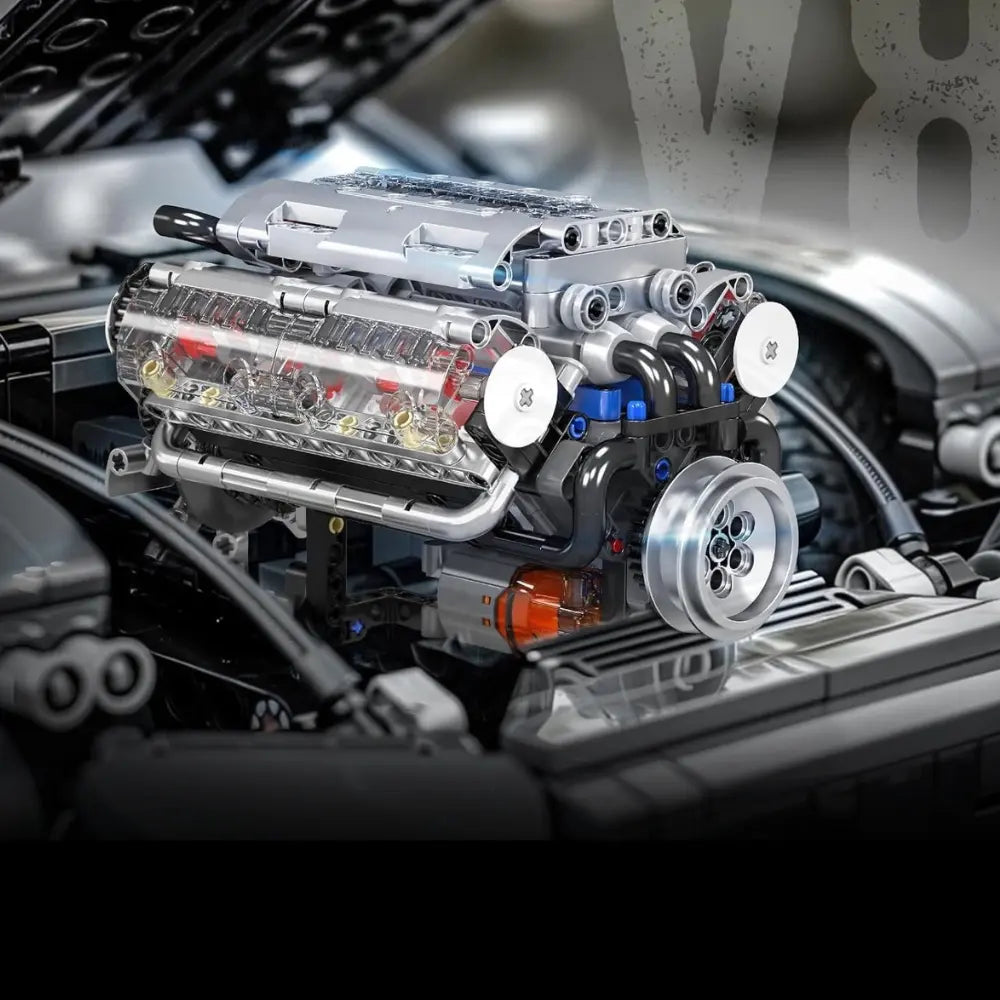
At smaller scales, detail has to be simplified or abandoned entirely — there’s simply not enough physical space for it. Interior stitching, brake caliper detail, panel gaps, engine bay components: all of it either gets left out or gets faked with printing rather than built. At 1:8, most of that detail can actually be built rather than implied.
This is also the scale where mechanical function becomes practical rather than a compromise. A working suspension system, a functional steering rack, an opening panel with real hinges — all of these need physical space to house the mechanism, and 1:8 is large enough to fit them without the model looking oversized or the mechanism looking crude. It’s part of why remote control is the norm rather than the exception at this scale: there’s genuinely enough room for a receiver, battery box and motor without them dominating the interior.
What to expect from a 1:8 build
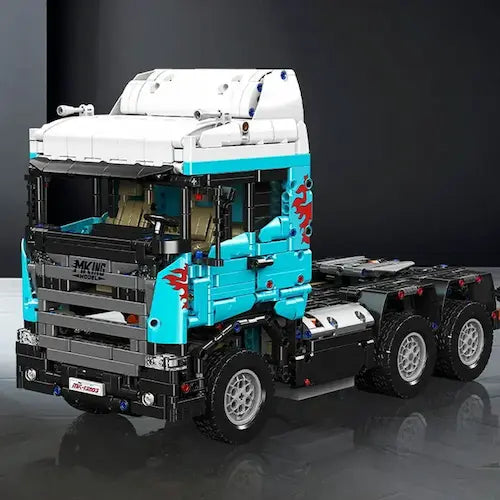
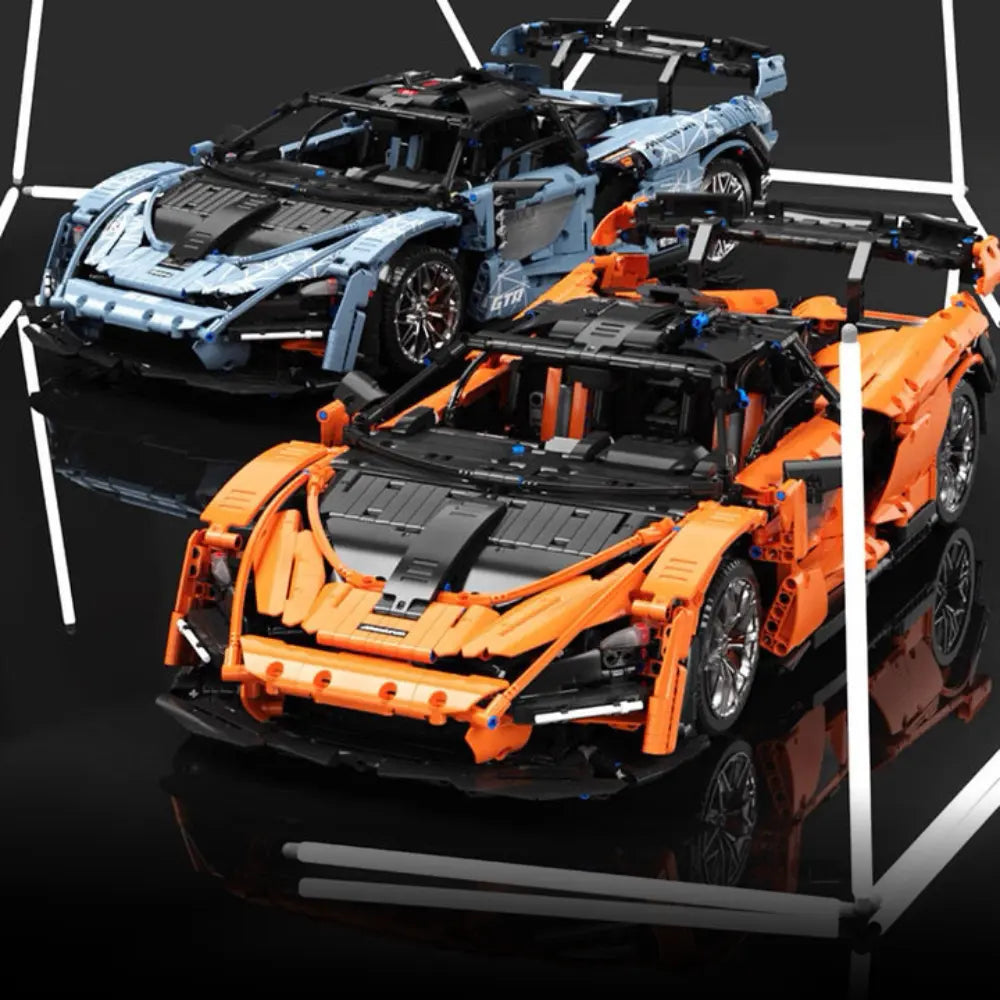
This isn’t a small commitment, and it shouldn’t be treated like one. Kits at this scale typically run from around 2,500 pieces up to 5,500+ for the most ambitious builds — multiple sessions, not an afternoon project. Most include remote control as standard, and many add electric doors, working suspension, or other opening features on top.
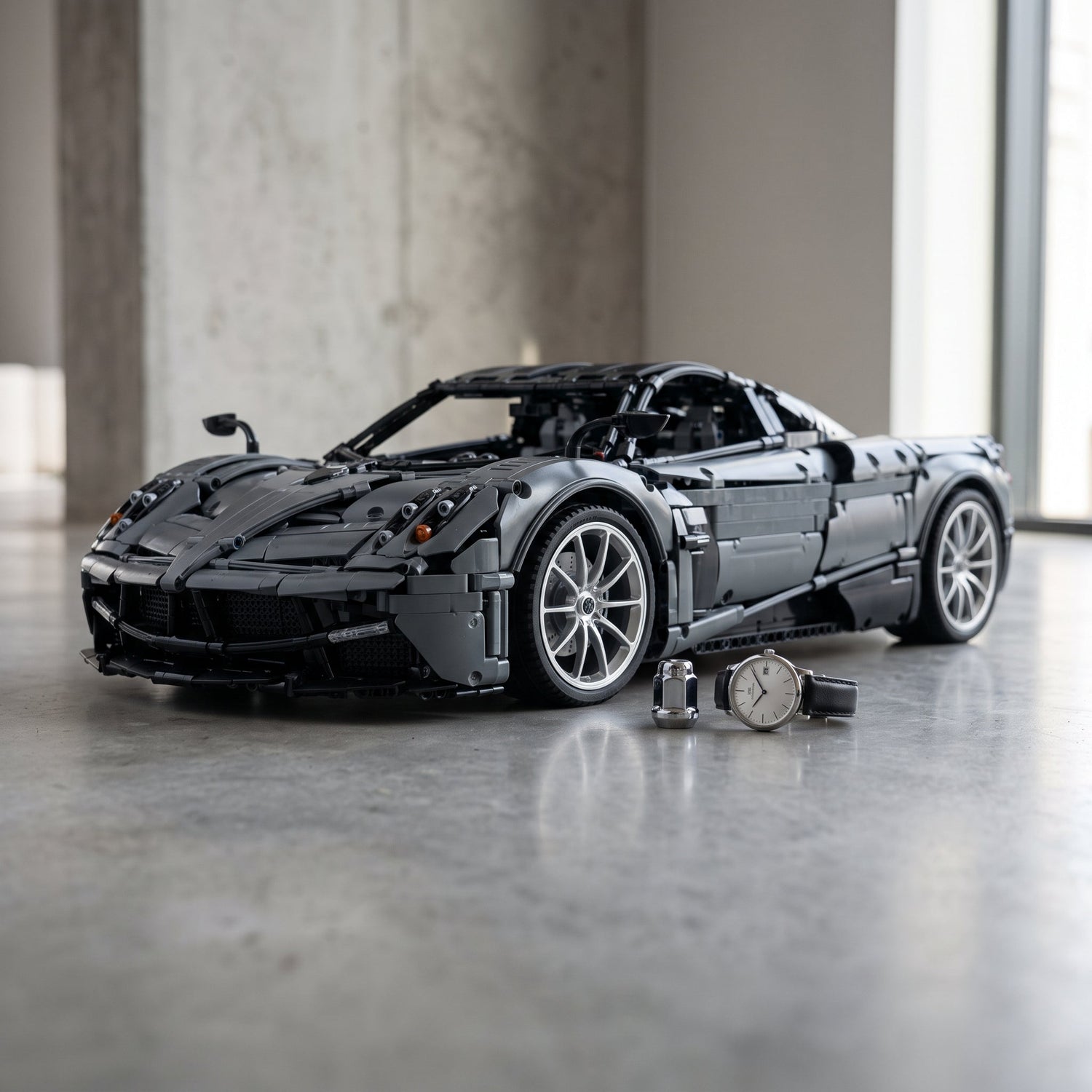
What you get for that time investment is a model with genuine presence — not a shelf trinket, but a centrepiece that reads as a scaled-down version of the real car rather than a simplified impression of one.
Is 1:8 right for you?
If you want your largest, most detailed single build — a genuine centrepiece rather than one of several — 1:8 is very likely the right answer, and it’s the scale both traditional model-making and hobby RC racing independently settled on for exactly that reason. If you’re building a multi-model collection instead, or don’t have the shelf space for something in the 55-60cm range, a smaller scale will usually serve you better; our scale guide across 1:8, 1:10, 1:14 and 1:24 breaks down where each size fits.

Leave a comment
This site is protected by hCaptcha and the hCaptcha Privacy Policy and Terms of Service apply.